By most expectations, the Cubs are off to a bad start. Going 2-2 against the AAA Dead Fish is not what people thought of Cubs after spring training.
But the same problems from last season's disappointment are cropping up again.
After 5 games, the Cubs are batting .204. The team has struck out 58 times in 229 plate appearances. That is more than a quarter of at bats. The Cubs have not scored in 17 innings.
People realize that the Cubs offense is falling back in the trap of "home run or bust" approach to the plate. As noted in the last few years, the Cubs have bashers not contact hitters. Many clubs have a balanced lineup with .300 hitters and RBI guys. The 2018 Astros have 4 of their 9 hitters batting over .300. In 2017, the Astros had 6 players (with 2 utility guys) hitting at or over .300. In 2017, the Cubs had only one player (reserve catcher Rene Rivera) hit over .300.
Just as bad is the starting pitching. Traditionally, a team looked to its rotation to eat up innings (because starters were the best pitchers on your staff). Teams now expect starters to get to 200 IP (which is well below a generation ago where 250 IP was the norm). Even so, teams have to cover at least 1476 innings per season. If starters cover 1000 IP, that means the bullpen must cover 476 IP. In an 8 man bullpen, that means about 60 IP per reliever (which equates to almost 60 appearances per bullpen arm). That represents a lot of wear and tear on bullpen arms which now have to cover a third of each contest.
The Cubs starters have only thrown 25.2 IP in the first five games, or only 49.2 percent of games. The starters should be covering 67 percent.
It may be a small sample size, but it is still evidence of issues that need to be resolved by Maddon and the coaching staff. The Cubs needed to get off to a fast start to not give the Brewers or Cardinals any confidence to contend in the NL Central. The Cubs should have feasted on Marlins and Reds pitching.

Showing posts with label batting. Show all posts
Showing posts with label batting. Show all posts
April 3, 2018
June 28, 2016
BASEBALL SURPRISES
The game of baseball never ceases to surprise you.
A fan can never truly say "I've seen it all."
Last night in Cincinnati, Kris Bryant did something no other baseball player had ever done. And when you see what he accomplished, you are surprised that he was the first.
Bryant set career highs with three home runs and five extra-base hits on Monday to help the Chicago Cubs beat the Reds 11-8.
Bryant became the fifth player in the past 100 years to go 5-for-5 with five extra-base hits in a game. He joined Josh Hamilton (2012), Steve Garvey (1977), Joe Adcock (1954) and Lou Boudreau (1946).
According to Elias Sports Bureau research, Bryant is the youngest player in Cubs history to hit three home runs in a game. He is 10 days younger than Ernie Banks was when he accomplished the feat in 1955. Elias also notes that Bryant's 16 total bases on Monday are the most by a Cub in the modern era.
Bryant's box score included three home runs and two doubles. No one in baseball history had that combination of five hits in a game. And that is the surprising thing: we have seen four home run games, wild extra inning contests, 20 plus runs scoring days - - - but never a player hit 3 HR and 2 doubles in a contest.
Bryant was in a zone because none of his home runs were cheap. They were long, towering blasts.
In another oddity, according to research by ESPN Stats & Information, Bryant is the first player in at least 100 years to hit three home runs and play three different positions (third base, right field and left field). Joe Maddon changing his positions did not affect Bryant at the plate. There is a comfort zone Bryant has reached in his second full season in the majors. And for the Cubs, that may be the foundation pillar for more modern baseball firsts.
A fan can never truly say "I've seen it all."
Last night in Cincinnati, Kris Bryant did something no other baseball player had ever done. And when you see what he accomplished, you are surprised that he was the first.
Bryant set career highs with three home runs and five extra-base hits on Monday to help the Chicago Cubs beat the Reds 11-8.
Bryant became the fifth player in the past 100 years to go 5-for-5 with five extra-base hits in a game. He joined Josh Hamilton (2012), Steve Garvey (1977), Joe Adcock (1954) and Lou Boudreau (1946).
According to Elias Sports Bureau research, Bryant is the youngest player in Cubs history to hit three home runs in a game. He is 10 days younger than Ernie Banks was when he accomplished the feat in 1955. Elias also notes that Bryant's 16 total bases on Monday are the most by a Cub in the modern era.
Bryant's box score included three home runs and two doubles. No one in baseball history had that combination of five hits in a game. And that is the surprising thing: we have seen four home run games, wild extra inning contests, 20 plus runs scoring days - - - but never a player hit 3 HR and 2 doubles in a contest.
Bryant was in a zone because none of his home runs were cheap. They were long, towering blasts.
In another oddity, according to research by ESPN Stats & Information, Bryant is the first player in at least 100 years to hit three home runs and play three different positions (third base, right field and left field). Joe Maddon changing his positions did not affect Bryant at the plate. There is a comfort zone Bryant has reached in his second full season in the majors. And for the Cubs, that may be the foundation pillar for more modern baseball firsts.

March 29, 2016
THE SHIFT
It is becoming apparent that pitching efficiency is being driven by The Shift, the data driven positioning of the infielders to overplay one side of the field over the other. The Shift comes from the sabermetric analysis of batter tendencies against right and left handed pitchers, individual pitchers and game situations.
It is becoming so common that a third baseman is playing behind second base that announcers have stopped pointing out the alignment in the play-by-play.
What is head scratching is that hitters are aware of the shifts against them but they don't do anything to counter it. They continue to hack away and sharply ground the ball directly into the mitts of the shift.
Very rarely does a batter lay down a bunt to the vacated third base line. As we have discussed before, bunting is not in favor anymore with managers or players. It has become taboo or archaic. But it is the only way to keep the defense honest and at home in their positions.
Just as I would bunt every time Jon Lester was on the mound until he could prove to me that he can throw to a base, I would instruct my hitters to bunt away from the extreme shifts. It is a single whether you bounce one off the right field wall or dribble one down the third base line. The purpose of batting is to put pressure on your opponent's defense. Hitting the ball directly at the fielders is making defensive play easy.
I'd like to a see a manager try to buck this trend. Reward players for bunting or slapping the ball to the vacant field.
It is becoming so common that a third baseman is playing behind second base that announcers have stopped pointing out the alignment in the play-by-play.
What is head scratching is that hitters are aware of the shifts against them but they don't do anything to counter it. They continue to hack away and sharply ground the ball directly into the mitts of the shift.
Very rarely does a batter lay down a bunt to the vacated third base line. As we have discussed before, bunting is not in favor anymore with managers or players. It has become taboo or archaic. But it is the only way to keep the defense honest and at home in their positions.
Just as I would bunt every time Jon Lester was on the mound until he could prove to me that he can throw to a base, I would instruct my hitters to bunt away from the extreme shifts. It is a single whether you bounce one off the right field wall or dribble one down the third base line. The purpose of batting is to put pressure on your opponent's defense. Hitting the ball directly at the fielders is making defensive play easy.
I'd like to a see a manager try to buck this trend. Reward players for bunting or slapping the ball to the vacant field.
June 28, 2015
WILL THE AXE FALL?
Baseball has been steeped in history. It is that the game has fundamentally NOT changed is why the game continues to survive.
Nothing is more true than with the layout of the diamond dimensions. Nothing is as true as the shape and construction of a baseball, its seams and its skin. And the baseball bat, a simple rounded stick of wood.
Until now.
 Jeff Passon of Yahoo Sports reports that the simple bat handle is about change.
The man who may help create the change is Red Sox infielder Dustin Pedroia. He is the only major leaguer currently using a bat that has an axe handle. Pedroia has spent a month using it as his lone bat, and the results are promising: Over the 28 games since he switched, he is hitting .353/.386/.504. His 42 hits over the past month are tied for the fourth most in baseball.
Now, unless you were a boy scout or a mountain logger, most kids today have no idea what an axe is or what is its purpose. The flattened wood frame is put through a heavy metal cutting tool to create a powerful yet top heavy tree cutter and wood splitter. This long used axe shape seems to have developed to maximize the power of the arm through the hands (palm).
Nothing is more true than with the layout of the diamond dimensions. Nothing is as true as the shape and construction of a baseball, its seams and its skin. And the baseball bat, a simple rounded stick of wood.
Until now.

The man who may help create the change is Red Sox infielder Dustin Pedroia. He is the only major leaguer currently using a bat that has an axe handle. Pedroia has spent a month using it as his lone bat, and the results are promising: Over the 28 games since he switched, he is hitting .353/.386/.504. His 42 hits over the past month are tied for the fourth most in baseball.
Now, unless you were a boy scout or a mountain logger, most kids today have no idea what an axe is or what is its purpose. The flattened wood frame is put through a heavy metal cutting tool to create a powerful yet top heavy tree cutter and wood splitter. This long used axe shape seems to have developed to maximize the power of the arm through the hands (palm).
"I think it's only a matter of
time before the axe-shaped handle is the standard," said Hugh Tompkins,
the director of research and development for Baden Sports, a
Seattle-area company that created the Axe Bat, which this year received
permission from Major League Baseball for in-game use. "The
round-handled bat will be like a rotary telephone."
The Axe Bat replaces the knob
with an oval-shaped handle that tapers into a curved, angled bottom.
The Axe bat that grew out of a simple question: Why does the knob – the
one piece of the bat known to hurt players, particularly those who grip
it on the lower edge of the palm and put their hamate bones in danger –
still exist when it imperils those it's supposed to help?
The current shape of most bats with the knob at the bottom is to keep the lower hand on the bat during the swing motion. If the knob was not at the bottom, the bat could be fly out of the players' hands. Even the Axe bat has a contoured bottom to keep the hand from slipping off.
Can a flatter hand surface help create more power and stability of a batter than a round bat? There is not enough statistical evidence to draw any conclusion. But it is an interesting innovation.
April 11, 2015
PACE OF PLAY
SI.com and AP reported that MLB has sent about 10 "slow pace: letters have been sent to players since the season started on Sunday.
The new pace of play rules mandates that hitters keep at least one foot in the batter's box during at-bats, with exceptions such as after foul balls. The batter has until there are five seconds remaining on the clock to enter the batter’s box.
A pitcher is expected to begin throwing to the plate as soon as the batter enters the box and becomes alert to the pitcher. Any batter that doesn't enter the box with five seconds left and any pitcher that doesn't throw a pitch with no time remaining will be in violation of the rule.
Pitchers are also required to start innings before 30 seconds remain on the countdown clocks.
Fines up to $500 per offense will start being handed out to players starting May 1 for those who do not adhere to the new rules.
Last year’s games took an average of three hours and two minutes to complete. Though the first 35 games this season, a nine-inning game is taking 2 hours and 51 minutes to complete.
As discussed for years, MLB is worried about the pace of play as today's youth have a video game attention span of minutes not hours. With batters now wearing body armor to the plate, and constantly adjusting their equipment and gloves after each pitch, something had to be done to get all that wasted time corralled for a better game rhythm. However, there are also a lot of pitchers who scuffle around the rubber, wave off signs and take their sweet time between throws.
Baseball is one of sports where the time between action was a social time for fans in the stands. People would talk about the game, its history, experiences, past events, and predict strategy. But it seems our culture is losing some of the basic conversation and social skills that made baseball the national pasttime.
The new pace of play rules mandates that hitters keep at least one foot in the batter's box during at-bats, with exceptions such as after foul balls. The batter has until there are five seconds remaining on the clock to enter the batter’s box.
A pitcher is expected to begin throwing to the plate as soon as the batter enters the box and becomes alert to the pitcher. Any batter that doesn't enter the box with five seconds left and any pitcher that doesn't throw a pitch with no time remaining will be in violation of the rule.
Pitchers are also required to start innings before 30 seconds remain on the countdown clocks.
Fines up to $500 per offense will start being handed out to players starting May 1 for those who do not adhere to the new rules.
Last year’s games took an average of three hours and two minutes to complete. Though the first 35 games this season, a nine-inning game is taking 2 hours and 51 minutes to complete.
As discussed for years, MLB is worried about the pace of play as today's youth have a video game attention span of minutes not hours. With batters now wearing body armor to the plate, and constantly adjusting their equipment and gloves after each pitch, something had to be done to get all that wasted time corralled for a better game rhythm. However, there are also a lot of pitchers who scuffle around the rubber, wave off signs and take their sweet time between throws.
Baseball is one of sports where the time between action was a social time for fans in the stands. People would talk about the game, its history, experiences, past events, and predict strategy. But it seems our culture is losing some of the basic conversation and social skills that made baseball the national pasttime.
March 17, 2015
THE K STAYS THE SAME
The Cubs collective had a strikeout problem. Hitters were taking an unbelievable amount of Ks. In 2014, the Cubs struck out 1,477 times (26.8 percent of at-bats).
New manager Joe Maddon has been aghast at the lack of team fundamentals. Patience and situational hitting at the plate is just as important as free swinging for home runs.
This spring, a review of the stats finds that Cub hitters are still free swinging, including a few non-home run types.
In 502 spring at-bats, the Cubs have struck out 117 times. That is a strike out percent of 23.26.
The club leaders in spring Ks currently (and individual strike out %)
Olt 8 (38.1)
Bryant 7 (30.4)
Baez 6 (26.0)
Castro 5 (25.0)
Montero 5 (27.8)
Ross 5 (38.5)
Soler 5 (23.8)
Szczur 5 (21.7)
Valaika 5 (22.7)
Szczur has a surprising 3 spring homers, so he must think that the only way to make the club is to be a power hitter. There is a natural competitive fever of a home run derby in Cub camp because the home run is the sports center highlight each night.
A 25 percent strike out ratio means a team is giving up 6.75 outs/game. That means not putting a ball into play (for a base hit, error, or advancing a runner). It is like NOT batting for 2 1/3 innings in a 9 inning contest. That sort of handicap gives an opponent a huge advantage, no matter how good is your pitching staff.
New manager Joe Maddon has been aghast at the lack of team fundamentals. Patience and situational hitting at the plate is just as important as free swinging for home runs.
This spring, a review of the stats finds that Cub hitters are still free swinging, including a few non-home run types.
In 502 spring at-bats, the Cubs have struck out 117 times. That is a strike out percent of 23.26.
The club leaders in spring Ks currently (and individual strike out %)
Olt 8 (38.1)
Bryant 7 (30.4)
Baez 6 (26.0)
Castro 5 (25.0)
Montero 5 (27.8)
Ross 5 (38.5)
Soler 5 (23.8)
Szczur 5 (21.7)
Valaika 5 (22.7)
Szczur has a surprising 3 spring homers, so he must think that the only way to make the club is to be a power hitter. There is a natural competitive fever of a home run derby in Cub camp because the home run is the sports center highlight each night.
A 25 percent strike out ratio means a team is giving up 6.75 outs/game. That means not putting a ball into play (for a base hit, error, or advancing a runner). It is like NOT batting for 2 1/3 innings in a 9 inning contest. That sort of handicap gives an opponent a huge advantage, no matter how good is your pitching staff.
February 16, 2015
TINKERING WITH THE BASICS
Jeff Passan of Yahoo Sports wrote:
Concern around baseball about the strike zone filtered down to the MLB’s Playing Rules Committee, which must formally adopt a rules change before it’s implemented. The committee will pay close attention to the size of the strike zone in 2015 with an eye on change as early as 2016 after studies showed it has expanded significantly since 2009, coinciding with a precipitous dip in run scoring. Of particular concern, sources said, is the low strike, a scourge not only because it has stretched beyond the zone’s boundaries but is considered a significantly more difficult pitch to hit.
However, baseball may be creating a problem it does not have.
Major League Baseball is
considering altering the textbook definition of the strike zone for the
first time in nearly two decades, fearful that the proliferation of the
low strike has sapped too much offense from the game, league sources
told Yahoo Sports.
Concern around baseball about the strike zone filtered down to the MLB’s Playing Rules Committee, which must formally adopt a rules change before it’s implemented. The committee will pay close attention to the size of the strike zone in 2015 with an eye on change as early as 2016 after studies showed it has expanded significantly since 2009, coinciding with a precipitous dip in run scoring. Of particular concern, sources said, is the low strike, a scourge not only because it has stretched beyond the zone’s boundaries but is considered a significantly more difficult pitch to hit.
Hardball Times study showed Runs per game fell to 4.07 in 2014, the lowest mark since 1981 and the 13th fewest since World War II. The reason for the runs per game drop is alleged to be the low strike zone.
Since 2009, the average size of
the called strike zone has jumped from 435 square inches to 475 square
inches, according to the article. The results: Pitchers are
throwing more in the lower part of the zone, and hitters are swinging at
an increased rate, knowing the tough-to-drive pitches will be called
strikes.
However, the elephant in the room that no one sees is that the "dramatic" drop off of offense since 2009 is the reduction of PED use in baseball. A major reason for the increased offensive statistics was the use of steroids and HGH. When light hitting second basemen suddenly become home run hitters the era's offensive numbers are out of whack with traditional reality.
Now, since youth baseball, we were taught the strike zone was from the uniform letters (chest) to the knees. It was canon of the sport, just like the distance between the base paths.
The problem, league sources said, stems
from technological leaps that caused unintended consequences. In 1996,
when the league last changed the strike zone to extend it from the top
of the knees to the bottom, beneath the hollow of the kneecap, it did so
to encourage umpires to call knee-level strikes. The lower end of the
zone, in practice, was about three-quarters of the way down the thigh,
so the idea was that by adjusting the eye levels of umpires to look
lower, the result would be a more traditional strike zone.
Then along came Questec, the
computerized pitch-tracking system, followed by Zone Evaluation, the
current version tied in to MLB’s PITCHf/x system. With a tremendous
degree of accuracy – especially in recent years – the systems tracked
textbook balls and strikes, and the home-plate umpires’ performances
were graded on a nightly basis. Over time, not only did umpires’ strike
zones move down to the knees, they went to the hollow and even a smidge
below.
Prior to these changes, hitters were given a healthy sweet zone of the belt to the letters strike zone. Pitchers had a smaller window of opportunity to get batters out. So the development of "trick" pitches such as fork ball which dives from the smaller strike zone to below the knees was needed to equalize pitching vs. batting. But if you watch enough baseball, you can easily tell that there are many hitters who are "low ball" crushers of the ball, like long hitters in golf. In fact, most teams have detailed hitting zone charts for each player (you can see examples in your baseball video games).
Baseball is a profession where players need to adapt their skills. Pitchers had to adapt to a squeezed strike zone that favored hitters. Now that the umpires are calling the low strike, hitters should need to adapt back to the traditional plate coverage from youth baseball drills. But since baseball worries that without big offensive ("chicks love the long ball"), it will lose the next generation of fans to high offensive sports like football and basketball. It is an unjustified fear. Baseball's traditions are what keeps a loyal fan base engaged in the game.
February 9, 2015
CRICKET NOISES
Normally, one could hear cricket noises at Wrigley Field in late September.
But a recent BBC report indicates that a different type of cricket is making its rounds throughout baseball's minor league systems.
Cricket is an English bat and ball sport with confusing rules, long innings, games that may take days to complete, in the setting of colonial aristocracy. It is considered an international sport because the Brits transported it to all its colonies, including India and Australia. As a result, it is a top three sport after soccer and rugby.
What is interesting is that cricket clubs have started scouting American baseball minor league systems for batters. It seems that baseball hitting swing paths can be easily converted into the upright swipes of a cricket bat. It still takes strong eye and hand coordination to play both sports. Cricket managers see American minor league hitters, who are stuck, blocked or not good enough to play American baseball, could be the next great Cricket player.
As teams covet their prospects more and more, there is a higher inventory of talent trapped at various levels in a team's system. Under normal circumstances, a new draftee would start in rookie ball. After a year, move up to Class A. Then after a year or so, to Double A. Then by year four, be in Triple AAA waiting for the call up. However, if production begins to fall off at any development stage, a prospect can be passed over for promotion and begin the label as a "career" minor league player.
Cricket teams want to tap the potential of good hit, no field candidates.
It is doubtful that the Cricket world is going to recruit a ton of talent from baseball, but it is another distraction that MLB clubs will have to contend with as youngsters weigh their sports options.
But a recent BBC report indicates that a different type of cricket is making its rounds throughout baseball's minor league systems.
Cricket is an English bat and ball sport with confusing rules, long innings, games that may take days to complete, in the setting of colonial aristocracy. It is considered an international sport because the Brits transported it to all its colonies, including India and Australia. As a result, it is a top three sport after soccer and rugby.
What is interesting is that cricket clubs have started scouting American baseball minor league systems for batters. It seems that baseball hitting swing paths can be easily converted into the upright swipes of a cricket bat. It still takes strong eye and hand coordination to play both sports. Cricket managers see American minor league hitters, who are stuck, blocked or not good enough to play American baseball, could be the next great Cricket player.
As teams covet their prospects more and more, there is a higher inventory of talent trapped at various levels in a team's system. Under normal circumstances, a new draftee would start in rookie ball. After a year, move up to Class A. Then after a year or so, to Double A. Then by year four, be in Triple AAA waiting for the call up. However, if production begins to fall off at any development stage, a prospect can be passed over for promotion and begin the label as a "career" minor league player.
Cricket teams want to tap the potential of good hit, no field candidates.
It is doubtful that the Cricket world is going to recruit a ton of talent from baseball, but it is another distraction that MLB clubs will have to contend with as youngsters weigh their sports options.
May 23, 2013
MIND BOGGLING
Manager Dale Sveum called it "mild boggling" on why his team has such a close run differential but is 9 games under .500. He rambled off many of the reasons: untimely hitting, runners in scoring position, lack of power, defense. But it is the offense that slumbers the most, including last night's awful 1-0 loss to Francisco Liriano and the Pirates.
The team's batting statistics tell the tale.
The only .300 hitters on the squad are two backups and Garza after one game.
There are only three starters hitting more than .280.
There are only two players who have driven in more than 20 runs.
There is only one player who has hit 10 home runs.
Excluding pitchers, there are five players batting under .230.
The team's batting statistics tell the tale.
The only .300 hitters on the squad are two backups and Garza after one game.
There are only three starters hitting more than .280.
There are only two players who have driven in more than 20 runs.
There is only one player who has hit 10 home runs.
Excluding pitchers, there are five players batting under .230.
| RK | Player | Team | Pos | G | AB | R | H | 2B | 3B | HR | RBI | BB | SO | SB | CS | AVG▼ | OBP | SLG | OPS |
|---|---|---|---|---|---|---|---|---|---|---|---|---|---|---|---|---|---|---|---|
| 1 | Garza, M | CHC | P | 1 | 2 | 0 | 1 | 1 | 0 | 0 | 2 | 0 | 1 | 0 | 0 | .500 | .500 | 1.000 | 1.500 |
| 2 | Sweeney, R | CHC | RF | 12 | 21 | 3 | 7 | 3 | 0 | 1 | 1 | 2 | 5 | 0 | 0 | .333 | .391 | .619 | 1.010 |
| 3 | Ransom, C | CHC | 3B | 16 | 46 | 5 | 14 | 4 | 0 | 3 | 5 | 4 | 19 | 0 | 0 | .304 | .360 | .587 | .947 |
| 4 | DeJesus, D | CHC | CF | 43 | 138 | 24 | 41 | 12 | 1 | 5 | 16 | 14 | 21 | 3 | 0 | .297 | .366 | .507 | .873 |
| 5 | Castillo, W | CHC | C | 36 | 130 | 16 | 38 | 10 | 0 | 1 | 8 | 1 | 36 | 1 | 0 | .292 | .328 | .392 | .721 |
| 6 | Schierholtz, N | CHC | RF | 39 | 124 | 17 | 35 | 14 | 0 | 5 | 19 | 6 | 17 | 4 | 2 | .282 | .318 | .516 | .834 |
| 7 | Castro, S | CHC | SS | 45 | 192 | 23 | 51 | 10 | 1 | 3 | 21 | 7 | 31 | 2 | 1 | .266 | .295 | .375 | .670 |
| 8 | Soriano, A | CHC | LF | 42 | 163 | 18 | 43 | 11 | 0 | 4 | 15 | 5 | 38 | 5 | 1 | .264 | .294 | .405 | .699 |
| 9 | Wood, T | CHC | P | 12 | 19 | 4 | 5 | 1 | 0 | 1 | 3 | 1 | 7 | 1 | 0 | .263 | .300 | .474 | .774 |
| 10 | Rizzo, A | CHC | 1B | 45 | 176 | 22 | 46 | 12 | 0 | 10 | 30 | 14 | 42 | 4 | 3 | .261 | .326 | .500 | .826 |
| 11 | Valbuena, L | CHC | 3B | 36 | 106 | 9 | 27 | 5 | 0 | 5 | 14 | 17 | 23 | 1 | 1 | .255 | .360 | .443 | .803 |
| 12 | Borbon, J | CHC | CF | 24 | 31 | 3 | 7 | 1 | 0 | 0 | 0 | 5 | 4 | 4 | 1 | .226 | .333 | .258 | .591 |
| 13 | Gonzalez, A | CHC | 2B | 11 | 23 | 3 | 5 | 1 | 0 | 1 | 2 | 2 | 6 | 0 | 0 | .217 | .269 | .391 | .661 |
| 14 | Barney, D | CHC | 2B | 31 | 106 | 13 | 23 | 8 | 1 | 2 | 6 | 13 | 11 | 2 | 0 | .217 | .314 | .368 | .682 |
| 15 | Navarro, D | CHC | C | 23 | 52 | 4 | 10 | 1 | 0 | 3 | 7 | 3 | 10 | 0 | 1 | .192 | .236 | .385 | .621 |
| 16 | Sappelt, D | CHC | CF | 20 | 45 | 3 | 8 | 2 | 0 | 0 | 1 | 3 | 9 | 2 | 0 | .178 | .229 | .222 | .451 |
| 17 | Villanueva, C | CHC | P | 9 | 17 | 1 | 3 | 0 | 0 | 0 | 0 | 0 | 9 | 0 | 0 | .176 | .176 | .176 | .353 |
| 18 | Feldman, S | CHC | P | 8 | 20 | 1 | 3 | 2 | 0 | 0 | 4 | 0 | 6 | 0 | 0 | .150 | .150 | .250 | .400 |
| 19 | Clevenger, S | CHC | C | 8 | 8 | 1 | 1 | 0 | 0 | 0 | 0 | 1 | 3 | 0 | 0 | .125 | .222 | .125 | .347 |
| 20 | Samardzija, J | CHC | P | 10 | 17 | 3 | 2 | 1 | 0 | 1 | 2 | 1 | 10 | 0 | 0 | .118 | .167 | .353 | .520 |
| 21 | Hairston, S | CHC | RF | 29 | 55 | 3 | 6 | 2 | 0 | 3 | 7 | 1 | 9 | 1 | 0 | .109 | .136 | .309 | .445 |
| 22 | Jackson, E | CHC | P | 9 | 14 | 1 | 1 | 1 | 0 | 0 | 2 | 0 | 5 | 0 | 0 | .071 | .071 | .143 | .214 |
| 23 | Lillibridge, B | CHC | 2B | 9 | 24 | 0 | 1 | 0 | 0 | 0 | 2 | 0 | 9 | 0 | 0 | .042 | .042 | .042 | .083 |
April 20, 2013
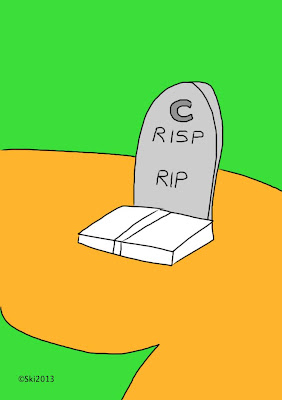
RISP
A good team needs to push home runners in scoring position.
In 2012, the Cubs team batting average with RISP was .231, dead last in the major league.
In 2012, with 2 outs and runners in scoring position, the Cubs batting average was .220 (22nd in the majors).
In 2013, the Cubs are having more trouble scoring base runners.
The Cubs team batting average for RISP is currently .144, dead last in the majors. This is 38 percent worse than last season's dreadful pace.
The Cubs team batting average for RISP with two outs is .182 (26th in the majors). This is 17.2 percent worse than last season.
In 2012, the Cubs team batting average with RISP was .231, dead last in the major league.
In 2012, with 2 outs and runners in scoring position, the Cubs batting average was .220 (22nd in the majors).
In 2013, the Cubs are having more trouble scoring base runners.
The Cubs team batting average for RISP is currently .144, dead last in the majors. This is 38 percent worse than last season's dreadful pace.
The Cubs team batting average for RISP with two outs is .182 (26th in the majors). This is 17.2 percent worse than last season.

Subscribe to:
Posts (Atom)